OpenBSD
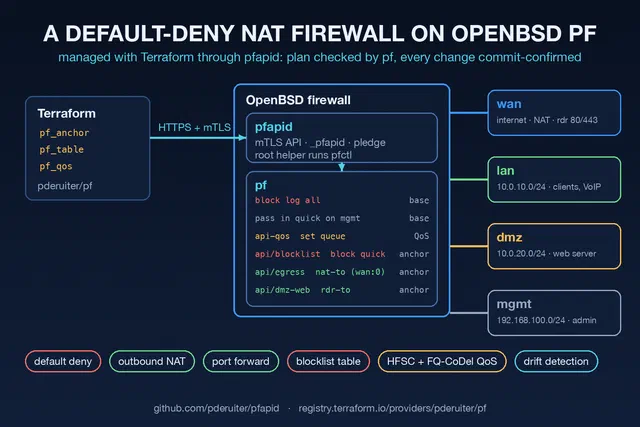
A Default-Deny NAT Firewall on OpenBSD pf, Managed with Terraform
Build a default-deny OpenBSD pf firewall with NAT, port forwarding, a blocklist and QoS, managed through pfapid and its Terraform provider.
16 articles about Security.
Build a default-deny OpenBSD pf firewall with NAT, port forwarding, a blocklist and QoS, managed through pfapid and its Terraform provider.
Mutual TLS (mTLS) provides strong authentication by requiring both client and server to present certificates.
HTTPS is no longer optional - it's a requirement for modern web applications.
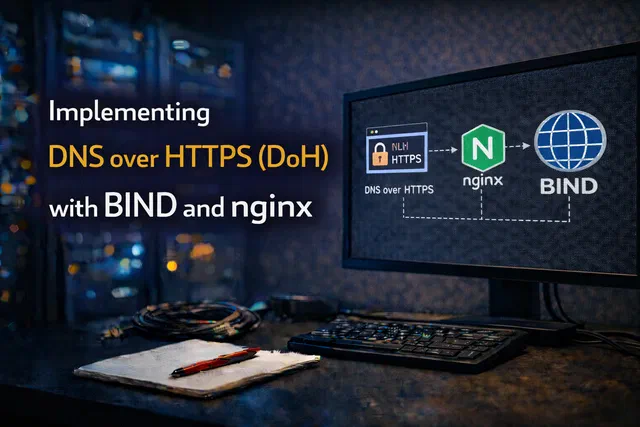
First, a short side note. Personal viewpoint: I’m not a fan of DNS over HTTPS (DoH).
Traditional DNS queries travel in plaintext, exposing your browsing habits to network observers.
After configuring DNSSEC validation on your resolvers, the next step is signing your own authoritative zones.
DNSSEC (Domain Name System Security Extensions) adds cryptographic authentication to DNS responses, protecting against cache poisoning and…
Response Policy Zones (RPZ) provide DNS-level security by allowing you to override DNS responses for specific domains.
A properly secured DNS server is critical infrastructure.
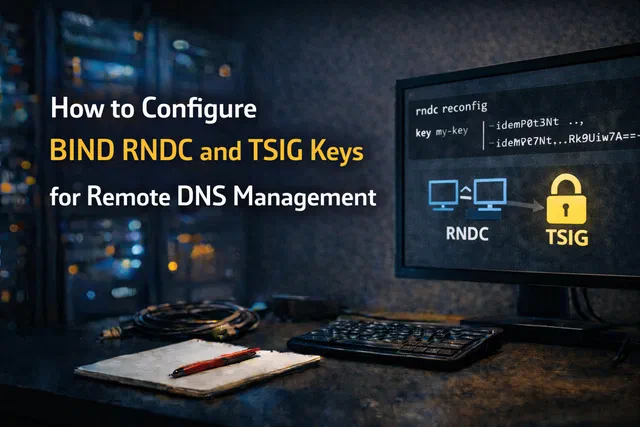
RNDC (Remote Name Daemon Control) is the administrative tool for managing BIND DNS servers.
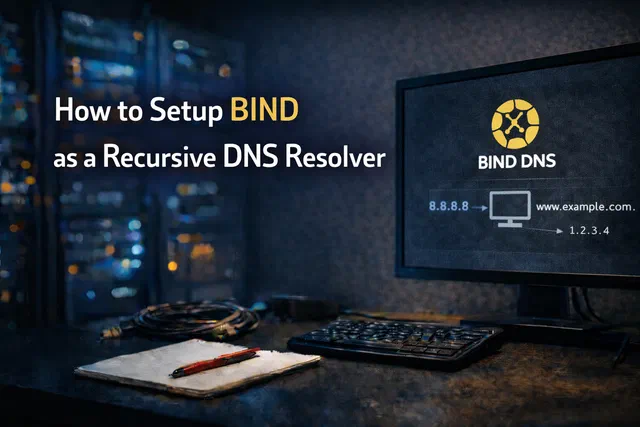
A recursive DNS resolver is the workhorse of DNS infrastructure, handling client queries by recursively querying authoritative nameservers until it …
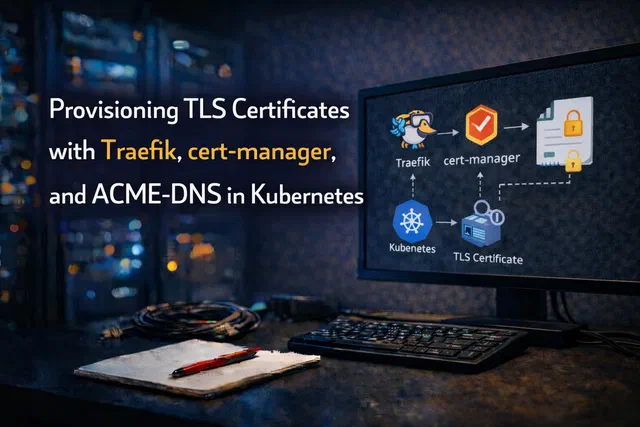
Introduction In a Kubernetes environment, having a robust and secure ingress controller is critical to properly route traffic to your applications.